
Baci 5 / Give me 5: @svjetski_putnik
If I could choose only one place to return to every time I go to Belgrade, it would certainly be Kalemegdan, a spacious park whose most important part is occupied by the Belgrade Fortress. And through the coming centuries, it was upgraded in accordance with the military-defense needs of the time. - The monument depicting a man with a falcon in one hand and a sword in the other is the work of the Croatian sculptor Ivan Meštrović, erected in 1928 on the occasion of the celebration of the breakthrough of the Thessaloniki front. and Kalemegdana offers a beautiful view of the confluence of the Sava and the Danube, a new part of the city. If you visit Belgrade, don’t miss to walk along the walls of the fortress, go through the Baroque gate, visit the Church of the Rosary or watch the sunset from the lookout above the Belgrade port. Every corner of Kalemegdan hides something interesting, so it is possible to explore for hours and enjoy the shade of many trees, even during the summer days.
Terasa hotela Crystal
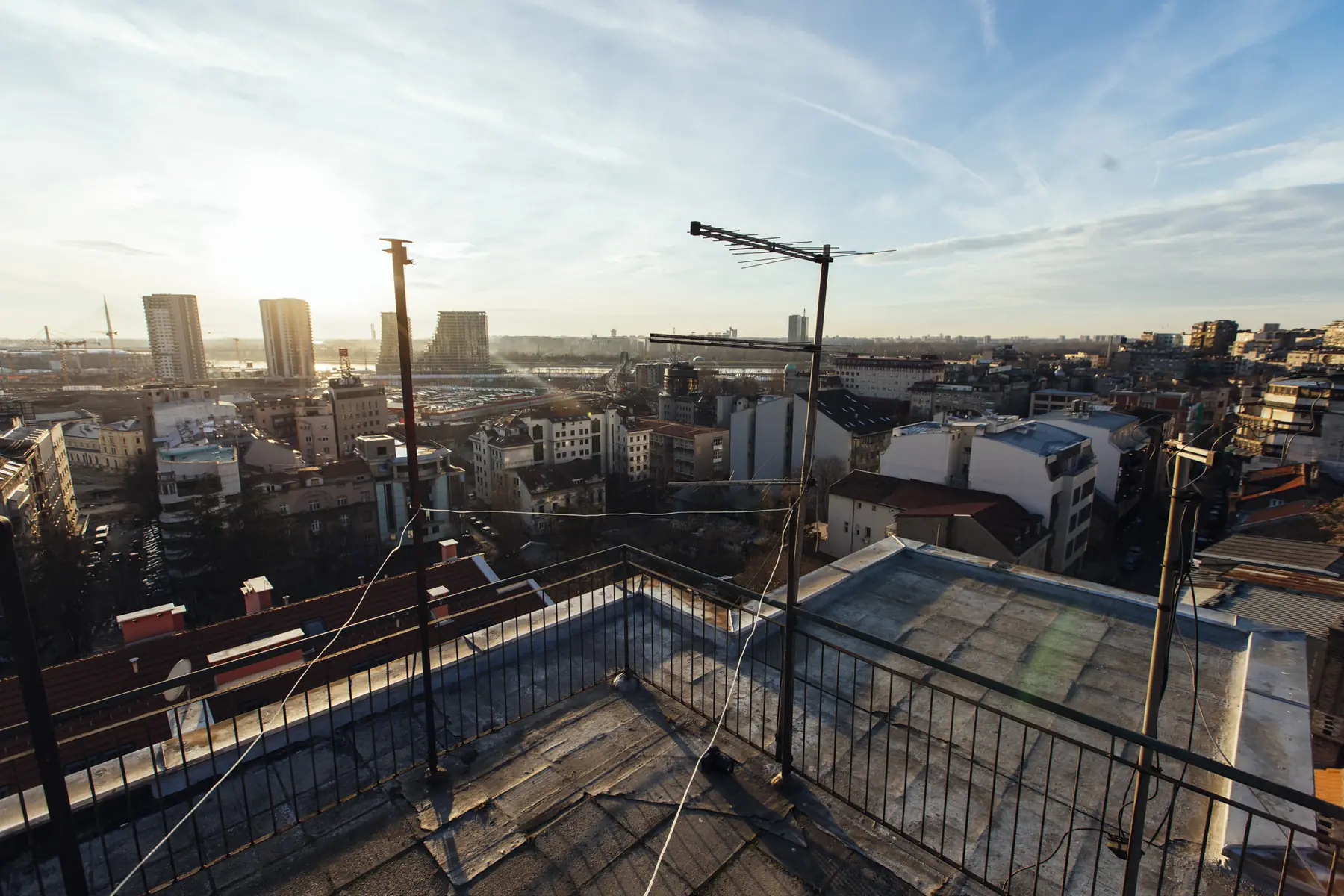
Although I am the type of person who spends all my time touring a city on my feet, on the rare moments when I decide to take a break, I like it to be a relaxed place with a nice view of some local landmark. When it comes to Belgrade, I found my oasis of peace right on the roof of the Crystal Hotel, located in Neimar, which offers probably one of the most beautiful views of the monumental Temple of St. Sava. The hotel is located on Internacionalnih brigada Street, opposite Karađorđev Park, within walking distance of the temple. There are other similar places in Belgrade with great views, such as the restaurant of the Mama Shelter hotel, Skylounge Belgrade within the Hilton hotel, from where you have a view of Slavija or the Caruso restaurant, which offers a view of the Hotel Moskva and Terazije plateau.
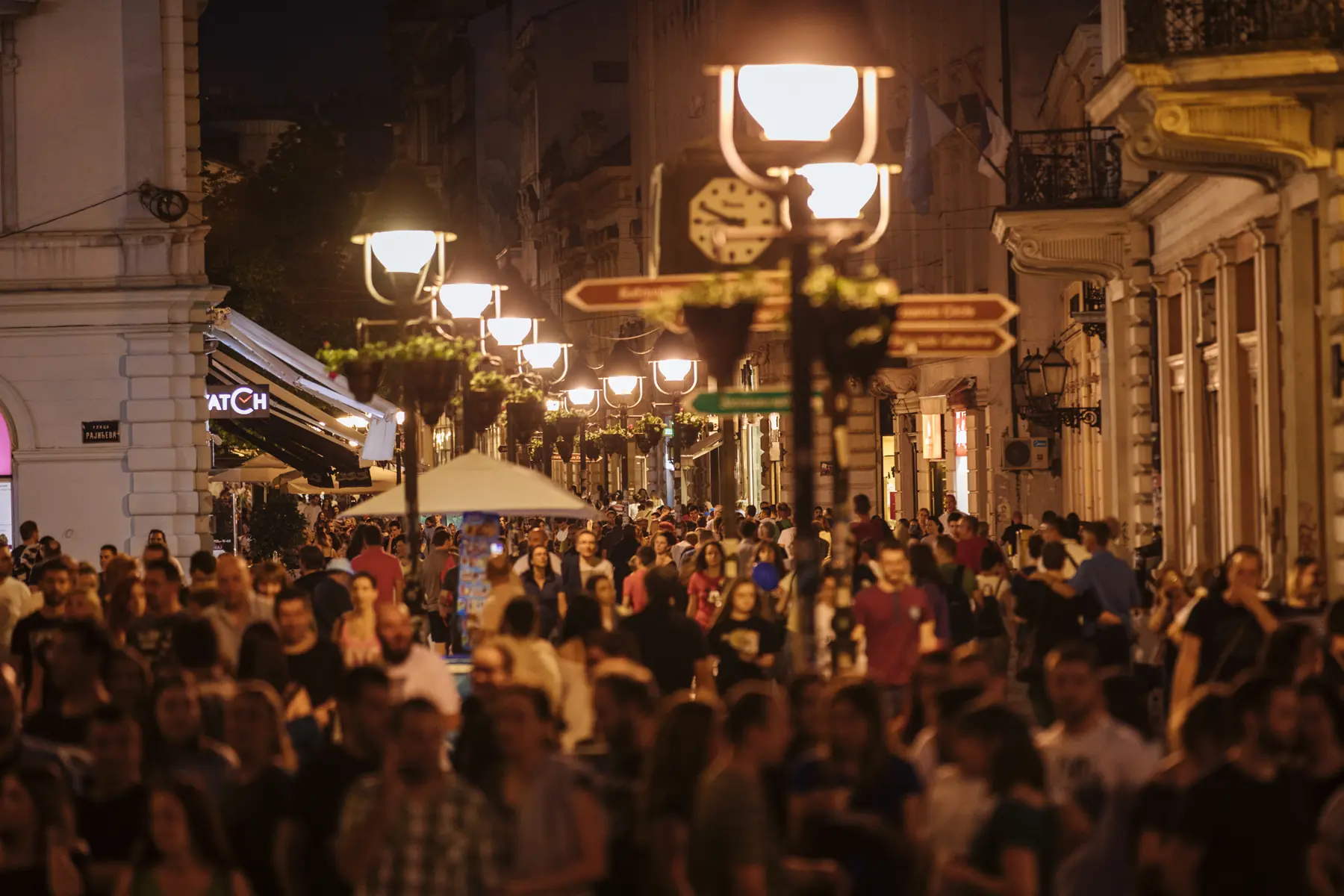
In the immediate vicinity of Kalemegdan, but also the famous Knez Mihailova Street, the main pedestrian zone and the lifeblood of Belgrade’s social life, is Kosančićev venac, one of my favorite parts of the city. A perfect combination of urbanity and relaxed atmosphere, Kosančićev venac is the area of the first compact settlement in Belgrade, with preserved tree lines, old houses and other buildings of cultural and historical significance, such as the house of Krsmanović, the Serbian Patriarchate, the Cathedral of the Holy Archangel Michael and Ljubica Konagin. This is where one of the most beautiful Art Nouveau buildings in Serbia is located, and it is a house built in 1910 for the needs of Mike Alas, a Serbian mathematician and university professor. In the immediate vicinity of the house there is a summer garden where you can enjoy the relaxed atmosphere of the old Belgrade district.
I stopped counting trips to Belgrade a long time ago, since for a long time it was my favorite destination for a quick escape from life in a small town. However, no matter how many times I visited it, I tended to follow the same imaginary route, from which I would rarely deviate. Therefore, it is not surprising that it took me more than a decade to set foot in Zemun for the first time. One day I just cut through and said to myself “Enough of Kalemegdan and Terazije and Slavija, Belgrade is much more than that”. The main motive for visiting Zemun was the Millennium or Gardoš Tower, built on the hill of the same name on the foundations of the ancient Zemun fortress Taurunum from the 9th century. This is one of the four towers built by the Hungarian authorities at the end points of the kingdom to mark the thousandth anniversary of the Hungarian settlement in the Pannonian Plain, and the only one that has survived to this day outside the borders of Hungary. The tower offers a beautiful view of Zemun and the Danube, and if this is not enough motivation to head in the direction of Zemun, you will further enrich the visit by walking through narrow cobbled streets or along the quay, where you will often see a flock of swans along the river. When you get tired, you can take a break in the always beautifully decorated ambience of the Gardoš cafeteria or one of the local restaurants.
Belgrade can be proud of the wide range of museums on various topics, and one that left a special impression on me is the Museum of Yugoslavia. This part of our common history today provokes divided emotions among the inhabitants of our former state. Some call it happier times, while others call for dictatorship and political repression. Regardless of which group you belong to, I would recommend a visit to the museum, where you will gain insight into how much SFR Yugoslavia was appreciated and recognized in the world through a series of information panels accompanied by photographs and numerous exhibits. Here you will see various items that Tito received as a gift, ranging from the service of dishes from Indonesia, traditional weapons and fabrics from Africa, to the giant globe and keys of Los Angeles, Pula and other cities that presented Tito with this recognition. The museum also houses the famous House of Flowers, built in 1972 as a winter garden for President Josip Broz Tito, where he spent a lot of time, due to the proximity of his residence in Užička 15. After he went to treatment in Ljubljana, he expressed the wish that in case of death he be buried right here. After his death, the place of burial was debated, but in the end his wish was granted and the House of Flowers was chosen as the last resting place, which was renovated for that purpose. Tito’s funeral was attended by 211 delegations from 128 countries, and due to the impracticality of the location, it was decided that only the highest officials of SFRY, SKJ, JNA and family members attend the ceremony of lowering the remains into the grave, while the others waited in front. It is interesting that during the funeral, the grave was covered with a fake marble slab, because the real one was too heavy and did not fit into the protocol, but was placed only the next day with the help of special mechanization.
On the Map
Hidden GemsZemun
Gardoš Tower
A 19th-century watchtower on Zemun's highest hill, built to mark a thousand years of Hungarian settlement and now simply the best sunset viewpoint in the city — one that almost nobody outside Zemun bothers with. Climb it once and you'll understand why Zemun locals never leave.

Hidden GemsStari Grad
Kosančićev venac
A hushed pocket of the old town above the Sava, all cobblestones and 19th-century houses, five minutes from Knez Mihailova and yet nobody's there. The view over the river from the edge of the ridge is one of the city's best-kept secrets.
Culture
Museum of Yugoslavia
Tito's mausoleum and the archive of a country that no longer exists, laid out with more nuance than the subject usually gets. Essential if you want to understand how this city — and this region — got here.
StayDorćol
Mama Shelter Belgrade
The design-hotel import that put a rooftop with a view of the Temple of Saint Sava in the middle of Dorćol. Younger, louder and more design-forward than Belgrade's old-guard hotels.

Belgrade in motion — RUN BGD is also a creative studio.
Work with RUN BGD